In 2026, the distinction between HCM and HRMS has become one of the most consequential decisions in enterprise HR technology — and one of the most misunderstood. Vendors often describe their products using both terms. Analysts use them with different precision. And company leaders making procurement decisions frequently discover mid-evaluation that they have been comparing systems of fundamentally different scope without realising it.
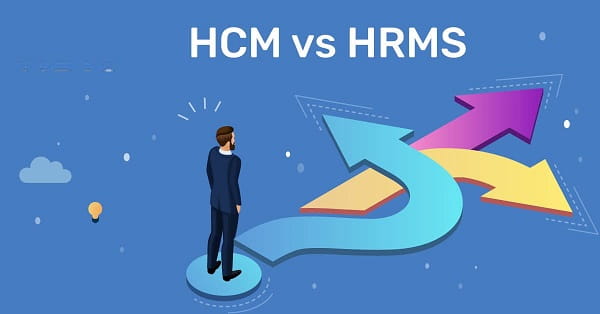
Here is the clearest way to understand the difference: an HRMS manages how HR processes run. An HCM manages how the workforce creates value for the organisation over time.
What Is an HRMS?
An HRMS — Human Resource Management System — is an integrated software platform that automates and manages core HR operational processes across the employee lifecycle. It covers the full spectrum of day-to-day HR work: payroll, attendance, recruitment, onboarding, performance management, leave administration, training management, and compliance reporting.
The HRMS is operationally focused. Its goal is efficiency, consistency, and accuracy in HR execution. It ensures that the right processes run reliably, that employee records are accurate, that payroll is correct, and that compliance obligations are met. For most growing mid-market companies, an HRMS provides everything required to run HR professionally.
What Is HCM?
HCM — Human Capital Management — starts from a fundamentally different premise. Where HRMS views employees as people whose administrative needs must be managed, HCM views employees as strategic assets whose development, engagement, and deployment directly drives organisational performance.
HCM includes all the operational functions of an HRMS but adds a strategic layer:
workforce planning and modelling, succession planning and leadership pipeline development, skills gap analysis and talent development strategy, total compensation strategy and market benchmarking, employee experience and engagement measurement at an organisational scale, diversity, equity, and inclusion analytics, and long-term organisational design and headcount forecasting.
As Workday describes the distinction, HCM practitioners understand that a happy and engaged workforce is a productive and innovative workforce. HCM is a proactive, strategic function — forecasting future workforce needs, developing talent pipelines, and aligning people strategy with business goals. HRMS is primarily reactive and operational — ensuring that today’s HR processes run correctly.
HCM vs HRMS: A Direct Comparison
| Dimension | HRMS | HCM |
| Primary Focus | HR operational efficiency | Strategic workforce development |
| Payroll & Compliance | Yes | Yes (included) |
| Recruitment & Onboarding | Yes | Yes (included) |
| Performance Management | Yes | Yes, plus succession planning |
| Learning & Development | Yes | Yes, plus strategic L&D planning |
| Workforce Planning & Forecasting | Limited | Advanced |
| Succession Planning | Basic or No | Yes |
| Skills Gap & Talent Analytics | Limited | Advanced |
| DEI Analytics | No | Yes |
| Employee Experience Strategy | No | Yes |
| Typical Organisation Size | SMEs to mid-market | Large enterprises and multinationals |
| HR Orientation | Tactical / Operational | Strategic / Transformational |
The Core Philosophical Difference
The gap between HRMS and HCM is as much philosophical as it is functional. HRMS asks: are we running HR processes correctly? HCM asks: are we developing the right people, with the right skills, in the right roles, to deliver the organisation’s strategy over the next three to five years?
Paychex describes the distinction accurately: HRMS expands to include broader HR functions while HCM adds a strategic layer centred on employee experience and long-term workforce planning.
This matters in practice because companies implementing HCM are not just buying software — they are committing to a different approach to people management that requires senior leadership involvement, HR capability at the strategic level, and data maturity that most organisations need time to build.
When Does an HRMS Become Insufficient?
Most organisations do not need HCM from day one. An HRMS is the appropriate investment for companies that need reliable, consistent HR operations. The trigger points that typically indicate HCM capability is needed include:
the organisation has grown beyond 500 employees and workforce planning decisions are affecting competitive performance; talent attrition in key roles is creating strategic risk and succession pipelines are absent or informal; the board or executive team is asking for workforce analytics that the current system cannot produce; the organisation is expanding into multiple geographies with different labour laws and talent markets; or leadership development and high-potential programmes need formal infrastructure.
For organisations below these thresholds, investing in full HCM suite capabilities is often disproportionate to the actual benefit realised.
Which Should You Choose?
An HRMS is the right choice for most companies in the SME and mid-market segment — those with between 50 and 500 employees that need comprehensive, reliable HR operations without enterprise-scale workforce planning complexity.
An HCM is the right investment for large organisations where workforce strategy is a board-level concern, where talent development and succession planning are critical to competitive performance, and where the HR function is expected to contribute directly to business strategy rather than supporting it operationally.
Frequently Asked Questions
Q1. Is HCM just a more expensive HRMS?
A: Not exactly. HCM is a different category of HR technology with a fundamentally different strategic purpose. It includes HRMS capabilities but extends into workforce planning, succession management, talent development strategy, and long-term organisational design. Paying for HCM without the organisational maturity to use its strategic features means paying for capabilities that will go unused.
Q2. Can a mid-size company use HCM?
A: Yes, particularly if it is a fast-growing mid-size company in a competitive talent market where succession planning and skills development are strategic priorities. Many HCM vendors offer mid-market configurations at a lower cost than full enterprise implementations.
Q3. Do HRMS platforms ever overlap with HCM?
A: Significantly, in 2026. Modern cloud HRMS platforms increasingly include basic workforce analytics, succession planning modules, and talent development tools that were previously only found in HCM suites. The line is blurring, which is why evaluating specific feature depth — rather than relying on product labels — is essential.
Q4. What are the leading HCM platforms in 2026?
A: The most widely adopted HCM platforms include Workday, SAP SuccessFactors, Oracle HCM Cloud, ADP Workforce Now, and Ceridian Dayforce. Leading HRMS platforms include BambooHR, Darwinbox, Zoho People, Keka, and Rippling, among others.
Q5. Does an organisation need to have an HRMS before implementing HCM?
A: Strong data hygiene and operational HR process maturity are prerequisites for HCM to deliver value. Organisations that attempt HCM implementation without solid foundational HR processes typically struggle to realise the strategic benefits. Most organisations do benefit from establishing reliable HRMS operations before expanding to HCM.